💭 Impressions
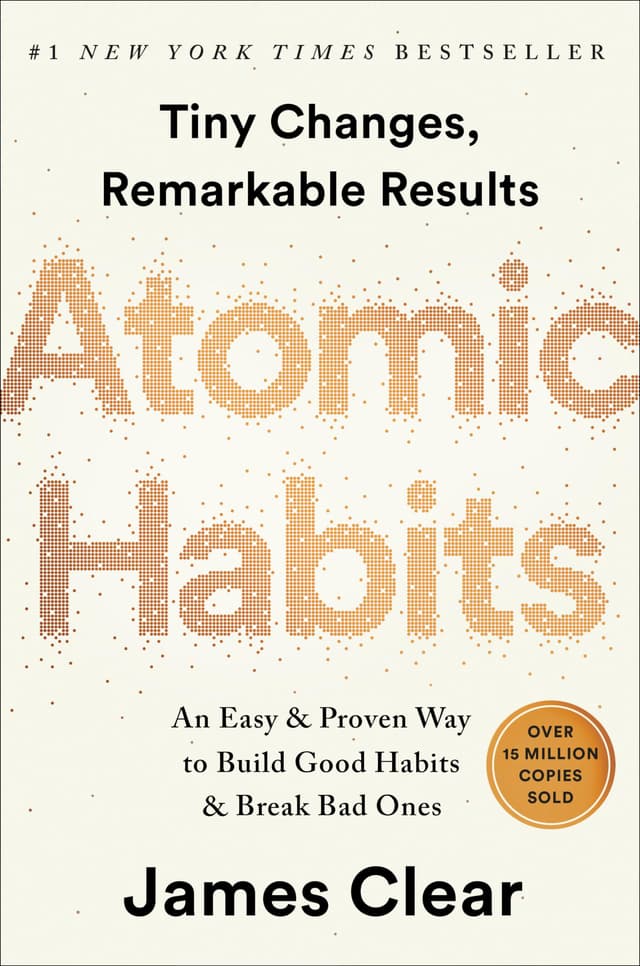
One of the best books I have ever read, such an easy read, and I got through it in about 3 weeks. This book is about making tiny, consistent improvements a part of your identity to achieve remarkable results in any area of your life, whether that’s health, finances, relationships, or anything else you’re working on.
🎯 Who Should Read It?
I truly believe there is no limit to who should read this book, as this book is about "habits", and we all have them. It’s applicable to almost anyone in any stage of their life.
🍀 How the Book Helped / Changed Me
-
Power of small daily decisions: It made me much more aware of my small decisions in my day-to-day. How quick decisions like turning on my computer to play video games or my laptop to get work done can determine the next few hours of my day.
-
The role of genetics in behaviours: This surprised me the most, as I didn’t expect him to talk about genetics. However, genes control how much of each hormone is produced, hormones determine emotions, and emotions determine our behaviours. In short, as everyone is genetically different with different behaviours, you should work hard on things that come easy to you.
-
Identifying unconscious bad habits: Dealing with them by using the 4 laws of behaviour change. For example, I reach for my phone as soon as I wake up to turn my alarm off, which usually leads to me checking my notifications. So a solution would be to leave my phone downstairs before bed, obeying the 3rd law: ‘Make it difficult’ by increasing the number of steps to get to a bad habit. As now I have to go all the way downstairs to get my phone.
✍️ My Top 3 Quotes
“Your actions reveal how badly you want something. If you keep saying something is a priority, but you never act on it, then you don’t really want it.
“Goals are good for setting a direction, but systems are the best for making progress.
“Some people spend their entire lives waiting for the time to be right to make an improvement.
📋 Summary
The Aggregation of Marginal Gains
James Clear starts off the book with a story of British Cycling, a team that went from mediocre to becoming world champions by making multiple tiny improvements, not one huge change.
This structure of opening each chapter with a real-world story made it practical and enjoyable. He breaks down exactly how to apply the same principle to your own life. Clear also encourages you to ask questions that help you think about your own goals and the person you want to be.
“Every action you take is a vote for the type of person you wish to become.
He then provides the resources through his own website, such as habit trackers and scorecards.
4 Laws of Behaviour Change
A single habit is made of a cue, craving, response, and reward. These components in good habits are formed by the 4 laws of behaviour change:
-
Make it obvious – if the habit is hidden away out of sight, you're very unlikely to act on it. For example, I sometimes forget to take my vitamin D & creatine pills because they were in the corner of the kitchen, so I moved them to my desk. An obvious spot that I go to, and now I don't forget.
-
Make it attractive – if the habit isn't something you necessarily want to do, then pair it with something that you enjoy so you can follow through on the habit every time. Or join a culture where that habit is normalised, for example, different societies in university. Let's say one that plays the sport you want to play every week.
-
Make it easy – downscale the habit so you can take action within under 2 minutes. This allows you to reduce the effort required to start. Going to the gym is made easier when you've already packed your bag the night before. So you don't need to think as much about it; you simply grab your bag and go.
-
Make it satisfying – if the task is unsatisfying, you probably won't repeat it again. You can give yourself something to look forward to after you've completed the task. An example would be, after studying for hours, you watch your favourite TV show as a reward. Now you want to get through the former task in excitement to start the latter.
The opposite can be applied to removing bad habits by making them invisible, unattractive, difficult, and unsatisfying.
Boredom
“The greatest threat to success is not failure but boredom.
Successful people not only have a lot of motivation but, more importantly, get used to being bored. A professional bodybuilder has to get through the boredom of doing the same exercises every day to get better and better at lifting weights. A businessperson has to get through the boredom of making sales calls / creating content in order to grow their company.
Personalise the Process
General advice might not be the best thing for you. You need to find a system that works for you. While genes decide which habits are best for you as an individual to pursue, they don’t remove the need for hard work. You can’t explain someone’s success away with luck unless you have put in the same amount of reps yourself.
Clear gets you to ask yourself some questions to find your system:
-
What feels like fun to you, but work for others?
-
What makes you lose track of time?
-
What comes naturally to you?
-
What do you get greater returns in than the average person?
For me, I would say coding, especially for the first question. Therefore, my habits are going to be based around that, and since it feels more enjoyable for me, I am more likely to stick to them.
No End Goal, Just 1% Better
Finally, habits are a process of continuous improvement; there is no end goal. If you can get 1 per cent better at something every day, it will compound over time into great results.
“Habits are the compound interest of self-improvement.
There have been a lot of projects I didn't feel like finishing, but I never regretted launching them. There have been a lot of exercises that I didn't feel like completing, but I've never regretted doing the workout. There have been a lot of days where I've felt like relaxing, but I've never regretted working on something that was important to me.
If you enjoyed this, check out more of my book reviews: